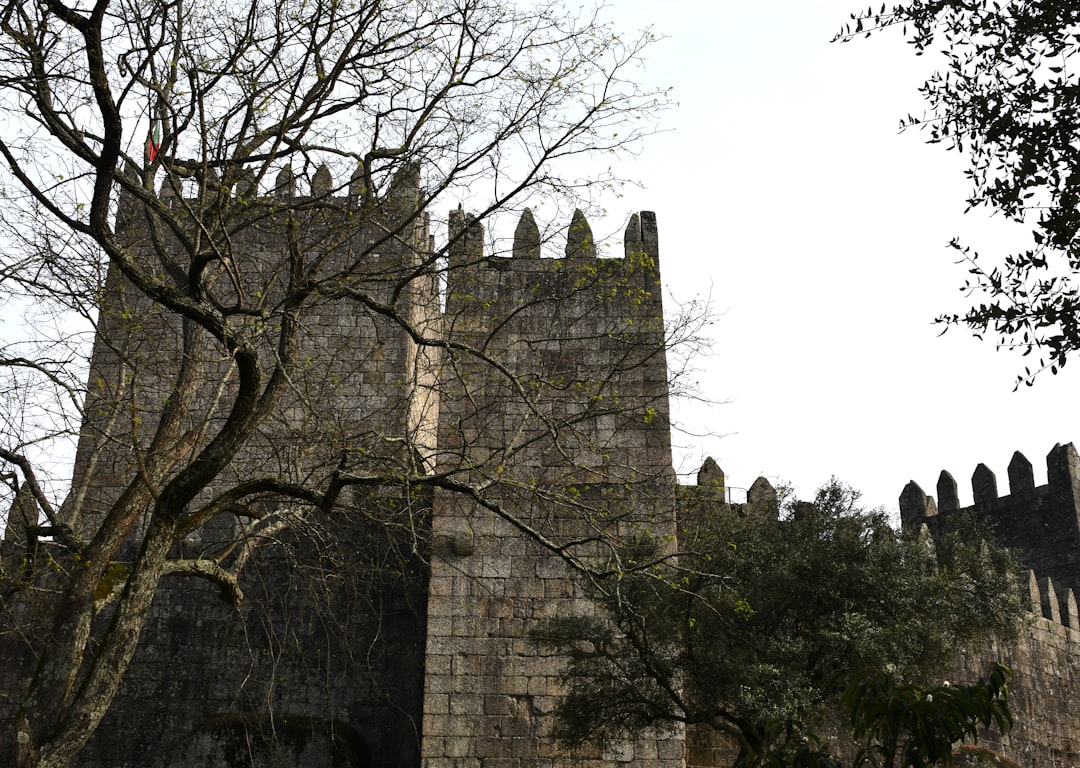
In the dry, mountainous interior of Portugal, in the region of Estremadura, there stands one of the most remarkable buildings in Christendom: the Convent of Christ in Tomar. It’s a sprawling complex of religious and military architecture, built over centuries, with cloister after cloister, chapel after chapel, towers and battlements and gardens. Walking through it, you’re walking through centuries of Portuguese history, and at the heart of that history is one of the most extraordinary stories in medieval Europe: the survival of the Knights Templar in Portugal.
The Templars were a military monastic order, founded after the First Crusade to protect pilgrims traveling to the Holy Land and to fight in the Crusades. They accumulated enormous wealth and power—too much power, in the minds of many European monarchs. In the early fourteenth century, most of the Templars were arrested, tried for heresy, and executed. The order was dissolved by papal order.
But in Portugal, something different happened. Here, the Templars didn’t disappear. They transformed. They became the Order of Christ, which would fund Portugal’s Age of Exploration. And their headquarters—the Convent of Christ in Tomar—would become one of the driving forces behind the voyages that discovered new worlds.
The Templars’ Role in the Reconquista
To understand the Templars in Portugal, you first have to understand the Reconquista—the centuries-long effort by Christian kingdoms to reconquer the Iberian Peninsula from Muslim rule.
The Muslim conquest of most of the Iberian Peninsula in the early eighth century had pushed the Christian kingdoms to the north, leaving them occupying only small territories in the mountains and valleys of what is now northern Spain and Portugal. The Reconquista was the slow, grinding process of fighting back, pushing the Muslim-ruled territories (Al-Andalus) further south, eventually (by the early fifteenth century) expelling the last Muslim kingdom (Granada) from the peninsula.
The Templars arrived in the Iberian Peninsula in the late twelfth century, drawn by the prestige and profit of fighting for Christendom. They established themselves in Portugal, where they became the guardians of exposed frontier castles and territories. The king of Portugal rewarded the Templars with land, titles, and wealth in exchange for their military service in the Reconquista.
Portuguese rulers granted the Templars enormous territories and exempted them from many taxes and regulations. The Templars became one of the largest landholders in Portugal, controlling vast estates and collecting significant revenue. They built castles and fortifications, maintained garrisons of knights and men-at-arms, and served as a crucial military force in defending and extending Christian Portuguese territory against the Muslim kingdoms of southern Iberia.
By the thirteenth century, the Templars in Portugal had become tremendously wealthy and powerful. They held castles like Almourol and Castelo de Marvão (though Marvão was not exclusively Templar territory). They controlled trade routes. They charged tolls and taxes on their lands. They accumulated a fortune in land, gold, and silver.
The Crisis of 1312: The Fall of the Templars
In 1312, the Catholic Church held the Council of Vienne in southern France. At this council, the Pope, under pressure from the French king Philip IV, decided to dissolve the Knights Templar. The order was accused of heresy, of worshipping strange idols, of engaging in occult practices. Most of these accusations were almost certainly false—they appear to have been manufactured as justification for seizing Templar wealth. The French king particularly wanted to get his hands on Templar money to pay his mounting debts.
The dissolution of the Templars was supposed to be universal. The Templars throughout Christendom were arrested, their properties seized, and many were executed. The order, which had existed for nearly two hundred years and had accumulated vast wealth, was dismantled.
But Portugal’s king, Dinis, was more clever than his European contemporaries. Rather than allow the Templars’ Portuguese properties to be seized by the Pope or church authorities, King Dinis did something remarkable: he rebranded them.
The Rebrand: The Order of Christ
In 1319, King Dinis of Portugal received papal permission to found a new order: the Order of Christ. The Order of Christ was, in many ways, simply the Knights Templar under a new name. The members of the Order of Christ were largely the same people who had been Templars. They held the same properties that the Templars had held. They performed the same military functions. They even used the Templar cross as their symbol (changing the color from white to red).
The distinction was technically important but practically insignificant. By rebranding the Templars as the Order of Christ, King Dinis managed to preserve the military order, its property, and its power, while technically complying with the Pope’s order to dissolve the Templars.
The Order of Christ became enormously powerful in Portugal. It controlled vast lands, collected significant revenues, and maintained a military force that was crucial to Portuguese security. But something else happened too: the Order became increasingly integrated with the crown’s ambitions for overseas exploration.
The Order of Christ and the Age of Exploration
The crucial moment came when Prince Henry the Navigator—the driving force behind Portuguese exploration—became Grand Master of the Order of Christ. Henry used the Order’s wealth and resources to fund his navigation school at Sagres and to equip the exploratory voyages that pushed down the African coast.
The Order of Christ’s insignia—a red cross—appeared on the sails of Portuguese ships as they sailed into unknown waters. Portuguese explorers carried the banner of the Order of Christ as they rounded the Cape of Good Hope, crossed the Indian Ocean, and reached India. The Order became the financial engine of Portuguese exploration.
In a real sense, the Crusades moved from the Holy Land to the Atlantic Ocean. The Templars, who had fought for Christendom against the Muslims in the Levant, now fought for Christendom and Portuguese commercial interests against the Muslim-controlled trade routes of the Indian Ocean. The language changed—it was exploration rather than conquest, commerce rather than holy war—but the underlying impulse was continuous.
The Convent of Christ at Tomar
All of this brings us to the Convent of Christ in Tomar, the headquarters of the Order of Christ and one of the most remarkable buildings in Portugal.
Tomar is a medium-sized town in the interior of central Portugal, built on the banks of the Nabão River. The town itself is charming, with narrow streets and traditional Portuguese architecture. But the Convent of Christ is spectacular.
The convent is built on a hillside, and it cascades down the slope—multiple cloisters, at different levels, connected by passages and staircases. The older, more austere sections were built when the order was primarily military, focused on defense and the practical necessities of garrison life. The later sections, built during the Age of Exploration and the Renaissance, are more elaborate, decorated with the ornate stonework and architectural flourishes that characterize Portuguese Manueline architecture.
The centerpiece is the Charola—a circular church building with an unusual design. It was built in the twelfth century by the Templars and has been expanded and modified many times. The octagonal tower that rises from the center is visible from miles away and has become the symbol of Tomar and of the Order of Christ.
Walking through the Convent of Christ is walking through layers of medieval and Renaissance history. The austere stone fortress of the Templars sits adjacent to the ornate Renaissance cloisters built during the height of Portuguese exploration. The two architectural styles represent two different eras of the same institution—the martial, crusading Templars, and the sophisticated, exploration-funding Order of Christ.
Visiting the Templar Castles
Beyond Tomar, travelers interested in the Templars in Portugal should also visit:
Almourol Castle, which sits dramatically on an island in the Tagus River, north of Lisbon. This castle was built by the Templars and remains one of the most visually striking castle sites in Portugal. The strategic position—controlling a key river crossing—made it enormously valuable during the Reconquista.
Castelo de Marvão, in the eastern interior of Portugal, is another remarkable castle site with Templar connections. Built high on a mountain ridge, it offers stunning views across the Portuguese interior and into Spain. The castle’s position made it crucial for defending Portugal’s eastern frontier.
These castles are not just historic sites—they’re reminders of the Templars’ role in Portuguese history. From these fortifications, the Templars maintained a constant watch for Muslim incursions and coordinated military operations for the expanding Christian kingdom.
The Lasting Legacy
The Templars in Portugal left multiple legacies. Most obviously, they left the Order of Christ, which became one of the most important institutions in Portuguese history. The wealth of the Order funded exploration, which created the Portuguese empire. Portuguese explorers sailing under the banner of the Order of Christ carried Portuguese language, culture, religion, and commerce around the world.
The Templars also left architectural legacies. The Convent of Christ in Tomar is one of the most important buildings in Portugal. Almourol and Marvão are among the most impressive castles in the country. These structures, built by or in the tradition of the Templars, remain as physical reminders of centuries of crusading warfare, exploration, and transformation.
And the Templars left ideological legacies. The idea of a military religious order, of Christendom expanding its reach, of sacred duty combined with commercial interest—these ideas shaped Portuguese identity for centuries. Even after the Templars themselves disappeared, the mentality they represented continued to influence Portuguese culture.
From the Holy Land to the Indian Ocean
What’s remarkable about the Portuguese Templars is the way they managed to adapt and survive. When the Templars everywhere else in Europe were being rounded up and executed, the Portuguese Templars transformed themselves. When the Crusades in the Holy Land came to an end, the crusading spirit that the Templars embodied was redirected toward exploration and the expansion of Christian Europe and Portuguese commerce in other parts of the world.
The Order of Christ, emerging from the ashes of the Templar order, became one of the institutions that made the Portuguese Age of Exploration possible. In that sense, the red cross of the Order of Christ, flying from Portuguese ships as they sailed to India and beyond, represents the transformation of medieval crusading ideology into the age of European expansion.
Standing in the Convent of Christ in Tomar, you’re standing in a place where medieval crusading history directly connects to the history of early modernity and the age of exploration. The stones beneath your feet remember centuries of transformation—from military fortress to exploration funding engine, from crusaders to navigators, from the Mediterranean and the Holy Land to the Atlantic Ocean and the Indian Ocean.
The Templars in Portugal didn’t just survive the crisis of 1312 that destroyed them elsewhere. In a very real sense, they transformed into something that was even more powerful and more consequential for world history. The Order of Christ, heir to the Templars, would help shape the modern world.




Leave a Reply