When you think of the RMS Titanic, you probably think of Leonardo DiCaprio and Kate Winslet on a fictional sinking ship, or perhaps you think of the tragic historical disaster itself. But what many Americans don’t realize is that the Titanic was built in Ireland, in the shipyards of Belfast, and the ship’s last port of call—where the final, fatal decision to ignore ice warnings was made—was the small Irish port of Cobh. Understanding the Titanic’s connection to Ireland opens up a much larger story about Irish maritime history, emigration, and the lives of ordinary Irish people caught up in history’s dramas.
Belfast’s Golden Age: Harland & Wolff
In the late 19th and early 20th centuries, Belfast was one of the world’s greatest shipbuilding centers. The city’s prosperity was built on the massive Harland & Wolff shipyard, which employed thousands of workers and had a reputation for building some of the finest ships in the world. Belfast’s Lagan River, protected and deep, provided perfect conditions for shipbuilding. The city had access to coal and steel supplies. And the Harland & Wolff company was innovative and ambitious.
The Titanic was the pride of the White Star Line, built by Harland & Wolff. The ship was 882 feet long, the largest moving object ever built at that time. It was considered unsinkable, a marvel of engineering and luxury. Thousands of Belfast workers spent years building the Titanic, working in the massive slipways, welding, bolting, and finishing the enormous vessel. The ship was launched on May 31, 1911, to enormous celebration. Belfast was proud of what it had built.
The Titanic cost £1.5 million to build (equivalent to roughly £200 million today). It featured electric heating, electric elevators, swimming pools, a gymnasium, and the finest dining facilities of any ship afloat. First-class passengers traveled in extraordinary luxury. Second-class accommodations were comfortable and respectable. Third-class (steerage) was cramped but still better than the conditions emigrant ships had offered just decades earlier.
The Ship’s Last Port: Cobh, Ireland
The Titanic’s maiden voyage began in Southampton, England, on April 10, 1912. The ship’s route took it across the Irish Sea. On April 11, the Titanic arrived at Cobh (pronounced “Cove”), then called Queenstown, a small port on the south coast of Ireland in County Cork.
Cobh was Ireland’s primary passenger embarkation point. Thousands of Irish emigrants had passed through here, boarding ships bound for America, Canada, and Australia. The Titanic picked up additional passengers at Cobh and took on mail. Second and third-class passengers boarded, many of them Irish hoping to start new lives in America.
What’s poignant about Cobh’s connection to the Titanic is that it was the last moment of safety. The ship left Cobh late on April 11 and headed into the Atlantic. That night, the ship struck an iceberg. In the early hours of April 15, the unsinkable Titanic sank, killing approximately 1,500 people.
The Irish Victims
Of the approximately 2,224 passengers and crew aboard the Titanic, about 120 were Irish, and many more had Irish connections. The disaster hit Irish communities particularly hard because the third-class passengers—the poorest and most numerous—were disproportionately Irish and Irish emigrants. Nearly 400 third-class passengers died, and a large proportion were Irish.
The Irish victims included families emigrating together, hoping for new opportunities in America. Parents traveling with children. Single young people seeking their fortunes. There were servants, farmers, laborers. The Titanic disaster was one of the great Irish tragedies, though it’s often overshadowed in popular memory by the ship’s general fame.
Some passengers and crew from the Titanic had local connections. The captain, Edward Smith, had connections to Staffordshire, England, but the ship’s Marconi operators were British. However, the cultural memory of the disaster in Ireland emphasized the Irish victims and passengers.
The Titanic Belfast Museum
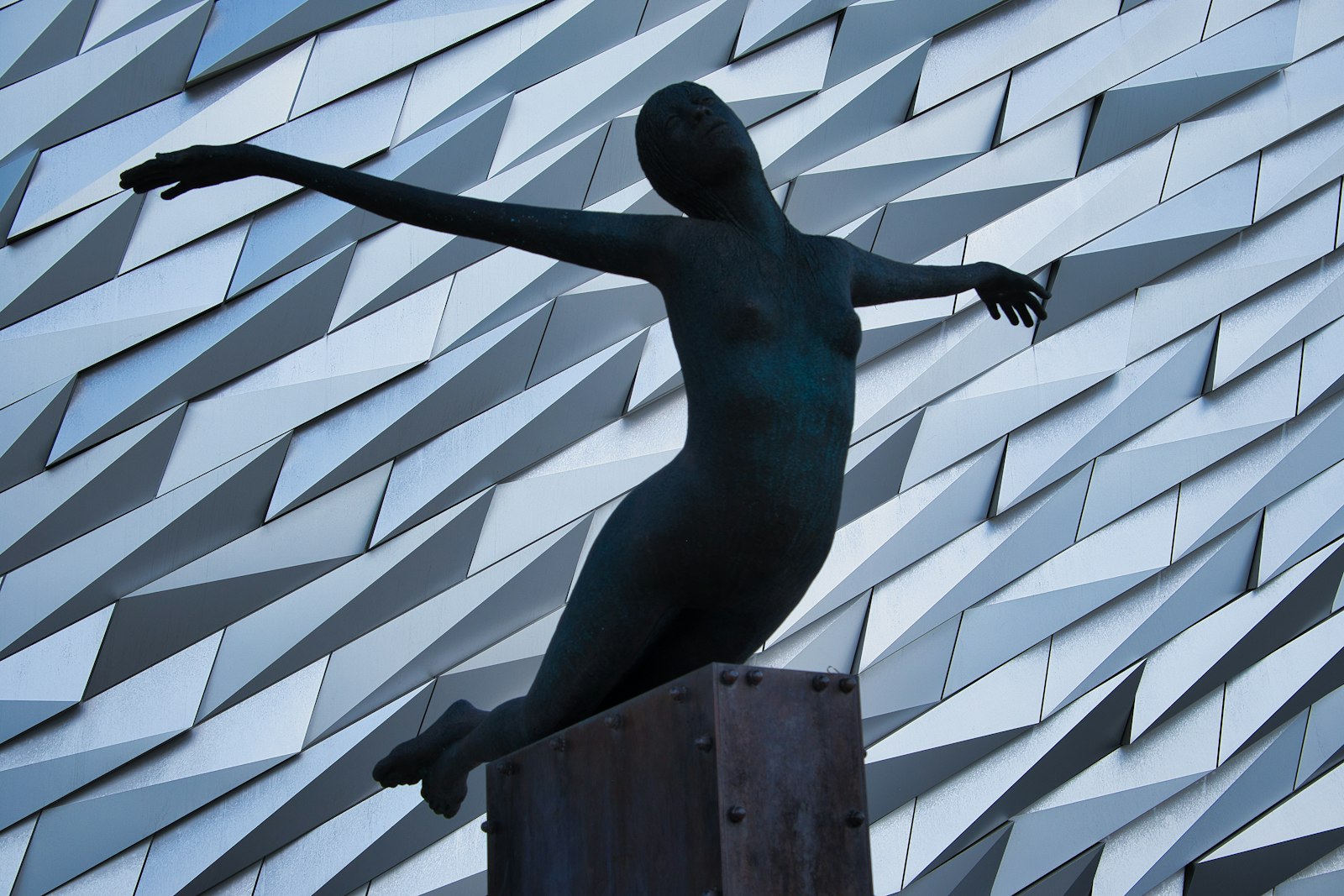
Today, you can visit the Titanic Belfast museum, which is located at the very site where the Titanic was built. The museum is a remarkable achievement—one of the world’s best museums dedicated to the Titanic. It’s interactive, well-designed, and thoroughly researched.
The museum doesn’t just tell the story of the Titanic itself. It places the ship in the context of Belfast’s maritime history, the industrial society that built it, and the lives of the workers who constructed it. You learn about the people of Belfast, the conditions they worked in, the pride they felt in building the great ship. You see the tools they used, photographs of the construction process, and accounts of what it meant to be part of creating something so enormous and advanced.
The museum also tells the human stories. Stories of the passengers and crew. The famous people aboard—wealthy businessmen, the unsinkable Molly Brown, the Astors. But also the ordinary people, the emigrating farmers and servants, the people in third class, the crew members who worked the ship.
The exhibits aren’t gratuitously morbid. Yes, the disaster is covered, but the emphasis is on understanding the ship, the people, and the historical moment. It’s a museum that educates and moves you, without exploiting tragedy.
Cobh Heritage Centre
In Cobh itself, you can visit the Cobh Heritage Centre, which is located in the original Victorian railway station. The center tells the story of Cobh’s role as Ireland’s chief emigration point. Millions of Irish passed through Cobh on their way to America and beyond.
The center includes exhibits about emigration, the lives of emigrants, the ships they traveled on, and what they found when they arrived in America. It’s a moving experience because Cobh represents the gateway through which Irish identity was spread across the Atlantic. Your ancestors might have departed from Cobh. The museum helps you connect with that history.
The Cobh Heritage Centre specifically covers the Titanic connection, with exhibits about the ship and the Irish passengers who boarded there.
Ireland’s Broader Maritime History
The Titanic is just one chapter in Ireland’s long maritime history. For centuries, Ireland had been a maritime nation. Viking ships raided Irish coasts. Irish monks took to the seas in tiny coracles (leather boats). Medieval Irish ports were centers of trade.
The Age of Sail saw Irish ports become important trading centers. Ships carrying goods from the Mediterranean reached Irish ports. The transatlantic trade—particularly the slave trade and sugar trade—involved Irish merchants and Irish ports.
The 19th century saw an explosion of Irish emigration, with hundreds of thousands of Irish crossing the Atlantic on emigrant ships. Some of these ships were floating coffins—the “coffin ships” that carried desperate Irish during and after the Famine. Conditions were terrible, diseases spread, and many emigrants died at sea. The Titanic’s third-class accommodations, while cramped, were vastly superior to the conditions on the coffin ships of just 50 years earlier.
The Lusitania: Another Maritime Tragedy
Another famous maritime disaster with Irish connections was the sinking of the RMS Lusitania in 1915, when a German U-boat torpedo hit the ship off the coast of Cork. The Lusitania sank in just 18 minutes, killing nearly 1,200 people, including 128 Americans. The sinking contributed to American outrage against Germany and is sometimes cited as an influence on American entry into World War I.
Modern Maritime Heritage
Today, Ireland’s maritime heritage is preserved in various ways. The ports of Cobh, Dublin, Cork, and other cities still function as working harbors. Several historic ships operate as museums or restaurants. Maritime museums in various locations tell the stories of Irish seafaring.
When you visit Ireland, the proximity to the sea is obvious. Ireland is an island, and water defines its character. The maritime history—including the dramatic stories of the Titanic and Lusitania—is an essential part of understanding Irish identity and history.
Why the Titanic Still Matters
The Titanic wasn’t Irish, wasn’t bound for Ireland, wasn’t even designed to stop in Ireland for long. Yet the ship’s connection to Belfast and Cobh is important because it tells stories about Irish labor, Irish emigration, and Irish engagement with the wider world.
The ship represented the height of industrial civilization—massive, complex, technically sophisticated. It represented wealth, luxury, and modernity. The fact that Belfast could build such a ship speaks to the city’s industrial prowess and Ireland’s participation in the modern world.
The Irish passengers aboard represented the massive movement of Irish people from Ireland to America in search of better lives. That diaspora would fundamentally shape both Irish and American culture. Many of those Irish passengers never arrived at their destinations, dying on the Titanic instead.
The disaster itself, while not exclusively Irish, had particular significance for Irish communities who had lost relatives and friends. It was a reminder of the dangers of emigration, the fragility of life, and the human costs of pursuing dreams in a new world.
When you visit Titanic Belfast or Cobh Heritage Centre, you’re not just learning about a famous ship. You’re connecting with Irish history, Irish labor, Irish emigration, and the Irish experience in the modern world. The Titanic story, in that sense, is quintessentially Irish: dramatic, tragic, involving ordinary people caught up in extraordinary events, and inextricably linked to the Irish diaspora and Irish contributions to the wider world.




Leave a Reply