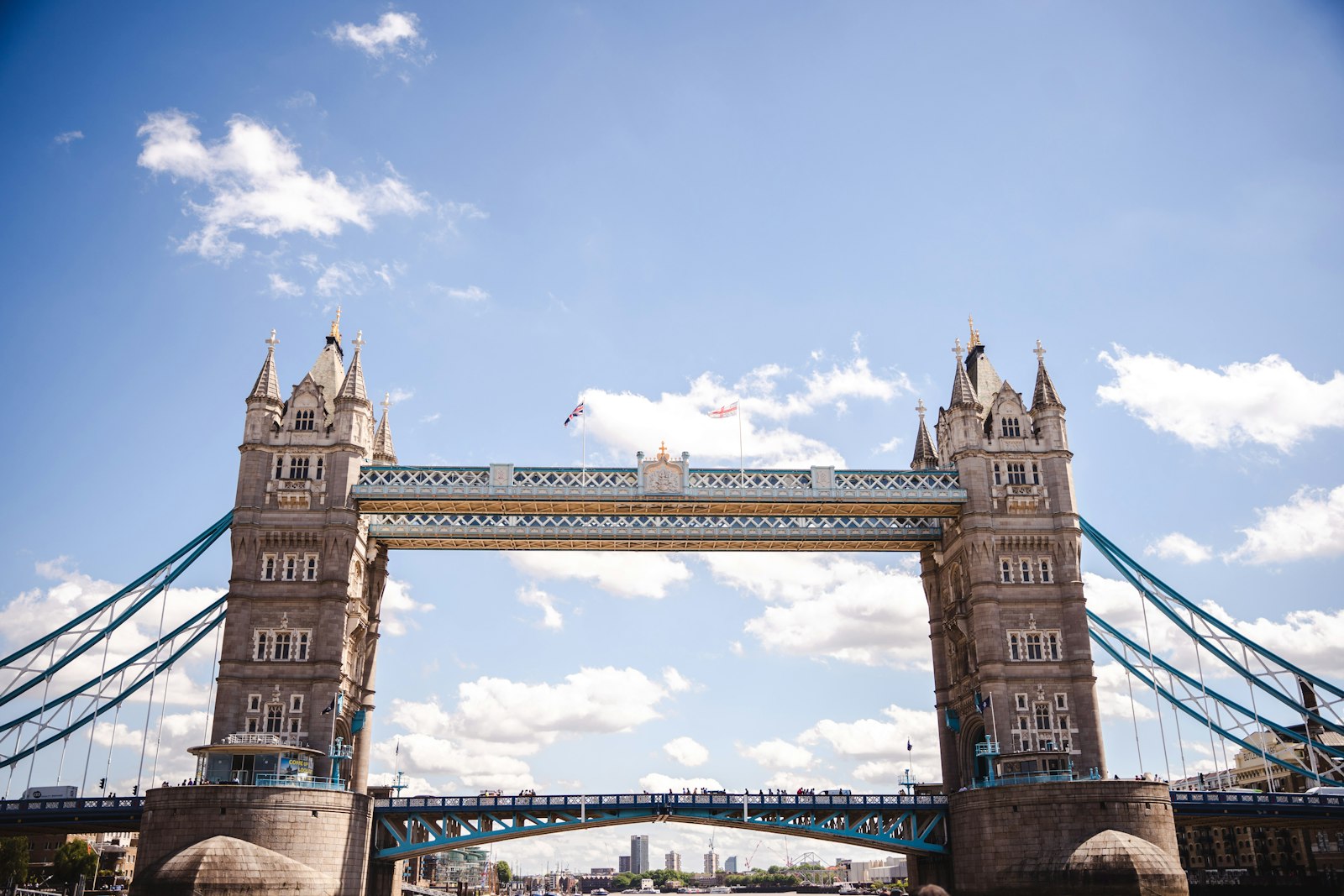
No single building encapsulates English history quite like the Tower of London. For nearly 1,000 years, this fortress has stood on the Thames, serving as royal palace, prison, torture chamber, mint, arsenal, and zoo. Within its walls, queens have been executed, princes have mysteriously disappeared, and fortunes have been made and lost. The Tower has witnessed England’s transformation from feudal kingdom to maritime empire to modern democracy. For American visitors, the Tower is one of those rare places where history isn’t just on display—it’s still palpable in the atmosphere.
William the Conqueror’s Fortress
In 1066, William the Conqueror crossed the English Channel, defeated the English king at Hastings, and became king of England. To consolidate his grip on London—the kingdom’s greatest city—William built a fortress in the southeast corner of London’s Roman walls. This fortress was the Tower of London.
The oldest surviving structure is the White Tower, the impressive stone keep at the complex’s heart. Completed around 1097, it’s the largest and most imposing building in the fortress. The White Tower was revolutionary for its time—a massive stone structure with walls 15 feet thick, designed to be impregnable. It contained royal apartments, a chapel, and defensive positions.
The name “Tower” actually refers to this central keep, but over centuries, the fortress expanded with additional walls, towers, and buildings. By the late medieval period, the Tower complex contained numerous structures and could house hundreds of people.
For centuries, the Tower served as a royal residence. Kings and queens lived here, conducted business, and held court. But as the monarchy moved to more comfortable palaces—Westminster, Whitehall, Buckingham—the Tower’s role shifted increasingly toward imprisonment and punishment.
The Princes in the Tower: A Medieval Mystery
One of the most famous mysteries in English history is the disappearance of the Princes in the Tower. In 1483, their uncle, the future Richard III, placed two young princes—the sons of the previous king, Edward IV—into Tower custody, supposedly for their protection. The boys, ages 12 and 9, were never seen again.
What happened remains historically murky. Richard III claimed they were illegitimate, but he was clearly the villain in the equation. Possible explanations include:
- Richard murdered them to secure his throne
- They escaped and survived (various pretenders claimed to be the elder prince)
- They died of natural causes and Richard covered it up
In 1674, workers renovating the Tower found small human bones beneath the White Tower stairs. These bones were assumed to be the princes, but modern analysis suggests they might belong to someone else. The mystery remains unresolved, but the emotional power persists—two children imprisoned and then vanishing forever captures the darkness that monarchy could contain.
Walking through the Tower, you can stand in the rooms where the princes were held. The silence seems to carry the weight of their mystery and their probable fate.
Anne Boleyn and the Execution Block
If the Princes in the Tower represent unsolved mystery, Anne Boleyn represents the vulnerability of royal women to royal whim. Anne was the woman for whom King Henry VIII broke with Rome and divorced his first wife. She promised Henry the male heir the king desperately wanted, but she bore a daughter (the future Elizabeth I) instead.
Desperate for a male heir, Henry became convinced that Anne had bewitched him and was conspiring with various men, including her own brother. In 1536, Anne was arrested and brought to the Tower. The charges—adultery, incest, treason—were almost certainly false, a modern fiction Henry created to justify her removal.
On May 19, 1536, Anne was executed inside the Tower by sword (a more merciful method than the usual burning reserved for women convicted of treason). She went to her death with remarkable courage, famously saying that the king was “a man of great courage, and has freed the ladies of the realm of a great evil.” Her head was chopped off immediately after her body hit the ground.
The site of her execution is marked within the Tower, and it’s one of the most emotionally significant spots for visitors. Anne’s story—falling from queen to prisoner to executed corpse in a matter of months—represents the absolute danger of being close to absolute power. Henry would marry four more times after Anne, but she remains the most famous of his wives.
Sir Walter Raleigh’s Long Imprisonment
Sir Walter Raleigh, the Elizabethan explorer and courtier, spent 13 years imprisoned in the Tower. Raleigh had fallen out of favor with King James I (who succeeded Elizabeth I) over various political disputes. He was accused of conspiring against the king and spent most of his remaining years locked in the Tower’s White Tower.
Unlike other famous Tower prisoners, Raleigh was allowed considerable freedom within the Tower’s walls. He conducted scientific experiments, worked on a history of the world, and cultivated a garden. He was eventually released briefly to lead an expedition to South America but was recaptured on his return and eventually executed on the old charge in 1618.
Raleigh’s imprisonment is notable for showing that the Tower wasn’t always a dungeon of horrors—important prisoners were often held with relative comfort and allowed to pursue intellectual work. But comfort was no substitute for freedom, and Raleigh’s long captivity surely contributed to his depression and declining health.
The Crown Jewels: Symbols of Monarchy
Among the Tower’s most famous contents are the Crown Jewels. These aren’t just valuable objects—they’re the physical symbols of monarchy. The Imperial State Crown, worn by the monarch during the State Opening of Parliament, contains over 3,000 gemstones, including the famous Koh-i-Noor diamond. The Scepter and Orb, the Sword of State, and other regalia represent centuries of royal power.
The Crown Jewels are stored in a heavily secured vault within the Tower and are among the most heavily protected objects in Britain. Viewing them, even behind bulletproof glass, is an extraordinary experience. These are real objects, made over centuries, used in real coronations. Running your eyes over the Crown Jewels connects you to William the Conqueror, Henry VIII, Elizabeth I, and every monarch since.
In 1671, an adventurer named Thomas Blood actually attempted to steal the Crown Jewels. He cut the Scepter in half, bent the Crown out of shape, and was nearly successful before being discovered. The fact that someone actually attempted to steal the symbols of state shows how valuable and significant they were considered. Blood was eventually pardoned (possibly for his entertainment value), but the incident led to better security.
The Beefeaters: Centuries of Ceremony
The Tower is guarded by the Yeoman Warders, popularly known as Beefeaters. These aren’t just security; they’re ceremonial guardians of a tradition stretching back to the reign of Henry VII. The origin of the name “Beefeater” is disputed—possibly from their ration of beef, possibly from “Buffetier” (a French guard). They wear distinctive uniforms of red and gold, with Tudor-style hats and ruffs.
The Beefeaters are professional soldiers who’ve served in the military and are selected for their character and service record. They’re also excellent storytellers, and their guided tours of the Tower bring its history to vivid life. Many have worked at the Tower for decades and have extraordinary knowledge of every corner and story.
The Ceremony of the Keys still occurs every night at the Tower. At precisely 9:53 PM, the Chief Yeoman Warder locks the gates, completing a 700-year-old ceremony. The ritual is so famous that visitors can apply to witness it (though you must book in advance). Watching this ancient ceremony repeated night after night, century after century, is genuinely moving—continuity of tradition in an age of constant change.
The Ravens: Legend and Reality
Perhaps the most famous Tower residents are the ravens. According to legend, if the ravens ever leave the Tower, the Tower will crumble and the kingdom will fall. This legend is probably modern, invented in the 20th century, but it’s become so embedded in British culture that the Tower maintains a small flock of ravens to ensure the kingdom’s safety.
The current ravens are given names and are something between pets and working animals. Visitors love spotting them, and the ravens, accustomed to human attention, are generally visible around the Tower grounds. Their black wings and sharp intelligence make them seem appropriately sinister and mystical—exactly the kind of creatures that belong in a place as dark as the Tower.
In reality, the ravens are kept healthy and well-fed, partly because they’re a tourist attraction but also because of the superstition. During World War II, when the Tower was damaged by bombing and many historic buildings were destroyed, the loss of ravens would have felt apocalyptic. So the Tower ensures they’re maintained—a charming example of how superstition and practicality can coincide.
The Tower During World War II
In the 20th century, the Tower’s role shifted from palace and prison to historical monument. But World War II created a brief period where the Tower’s medieval functions reemerged. The Tower was used to hold enemy aliens and political prisoners. Most remarkably, it was the execution site of German spies—the last executions to occur within the Tower’s walls.
Nazi agents caught in Britain were tried for espionage and executed by firing squad within the Tower. These executions are perhaps the closest the Tower came in modern times to its medieval role as a place of punishment and death for high-value prisoners.
The Tower’s buildings sustained damage during the Blitz, but the essential structures, particularly the White Tower, survived. After the war, the Tower was restored and opened to the public as a historical monument—a transition from fortress and palace to museum and tourist attraction.
Visiting the Tower Today
A visit to the Tower of London is practically mandatory for understanding English history. Plan for at least three hours—more if you’re thorough. The Tower is one of London’s most visited tourist attractions, so arrive early or book tickets in advance to avoid long queues.
The White Tower’s interior exhibits explore medieval life and warfare. You can see the Chapel of St. John, one of the oldest surviving buildings in London, remarkably intact from 1080. The various tower rooms display armor, weapons, and artifacts.
The Crown Jewels deserve their own substantial viewing time. The queue can be long, but it’s worth it. Seeing these objects—actually looking at the Imperial State Crown, the Coronation Ring, the Sword of State—connects you viscerally to centuries of monarchy.
The fortress walls can be walked, and the views across London from the ramparts are spectacular. The entire Thames waterfront tells the story of London’s growth and commerce.
Take time to listen to the Beefeaters’ stories. They’re often witty and always deeply knowledgeable. Their personal connection to the Tower’s daily life brings it alive in ways that impersonal museum displays can’t match.
The Tower’s Enduring Power
The Tower of London remains powerful because it’s not just a museum of dead history. It’s an active fortress still guarded by ceremonial soldiers. The rituals—the Ceremony of the Keys, the Changing of the Guard, the maintenance of the ravens—create a sense that the Tower is still alive, still serving its ancient purposes even if those purposes are now largely ceremonial.
The Tower encapsulates English history more completely than any other single location. It saw the Norman Conquest’s aftermath, the medieval monarchy’s power, the religious upheaval of the Reformation, the civil wars, the empire’s rise, and the modern nation. Walking through its walls, you’re walking through nearly 1,000 years of human drama, power, and history.
For American visitors, the Tower offers something that America’s newer history can’t: continuity stretching back to the Middle Ages, an institution that has witnessed the transformation of a nation over a millennium. That physical continuity—the same stones where medieval kings walked—connects you directly to the past in a way that few places on Earth can match.




Leave a Reply