Imagine a city where the streets become battlefields, where sewer tunnels become escape routes, where a whole population chooses to fight even when the outcome seems hopeless. Imagine young people, teenagers some of them, standing against tanks with nothing but rifles and determination. Imagine a capital city being methodically destroyed building by building, block by block, while the world watches and does nothing. This was Warsaw in the summer of 1944.
The Warsaw Uprising is one of history’s most tragic and most courageous episodes. For 63 days, the people of Warsaw fought the Nazi occupation with their bare hands, knowing that victory was unlikely but fighting anyway because the alternative—continued slavery—was unacceptable. When it was over, a million people had died or been forcibly deported, and Warsaw itself had been destroyed so thoroughly that almost nothing remained standing.
Yet from those ashes, the Poles rebuilt. Warsaw rose again. The determination that sent young fighters into the sewers in 1944 lived on. Today, visitors can walk through reconstructed Warsaw and see both the physical reconstruction and the memorial to the uprising—a city literally rebuilt as an act of defiance.
The Summer of 1944: The Calculation That Failed
To understand the Warsaw Uprising, you need to understand the situation in the summer of 1944. Nazi Germany was in retreat on all fronts. The D-Day invasion had succeeded in Normandy. Soviet forces were pushing westward, liberating territory from the Nazis. By early August 1944, Soviet armies were approaching the Vistula River, just across from Warsaw. For the first time in five years, Poles could see liberation on the horizon.
The Home Army (Armia Krajowa), the main Polish resistance organization in Warsaw, faced a crucial decision. If they didn’t act, the Soviets would liberate Warsaw and establish Soviet control over Poland. The Soviets couldn’t be trusted to respect Polish independence—the Molotov-Ribbentrop Pact of 1939 had shown that the Soviet Union and Nazi Germany had already agreed to partition Poland between them. Even though they were now enemies, there was no reason to believe that Stalin’s intentions toward Poland had changed.
The Home Army’s commander, General Tadeusz Bór-Komorowski, believed that if Warsaw rose up and liberated itself before the Soviets arrived, they could claim the right to self-determination. If the Red Army had to fight to take Warsaw, that was one thing. But if Polish fighters, Polish citizens, liberated their own capital—that would be different. That would prove that Poles could defend themselves and deserved independence.
It was a gamble. The Home Army had perhaps 40,000 fighters, many of them poorly armed. The Germans occupying Warsaw had tanks, artillery, air force support, and professional soldiers. But the calculation wasn’t entirely unreasonable. The German position in Warsaw seemed weak. The Germans’ main armies were engaged in battles elsewhere. Maybe a determined uprising could succeed.
On August 1, 1944, at 5 PM, the signal came. Fighters throughout Warsaw rose up simultaneously. The uprising had begun.
The First Days: Hope and Heroism
Those early days saw extraordinary acts of courage. Untrained civilians picked up weapons. Students, office workers, intellectuals, factory workers—anyone who could hold a gun joined the fight. They attacked German positions. In some areas, they had early successes. They captured buildings, barricaded streets, and claimed control of significant portions of the city.
The insurgents were desperately outnumbered and outgunned, but they had something the Germans didn’t expect: intimate knowledge of their own city. They knew the streets, the alleys, the buildings. They knew which buildings commanded which approaches. They improvised barricades from rubble and furniture. They used Molotov cocktails—bottles filled with flaming gasoline—against German tanks. In the early days, they even captured some German weapons and vehicles.
The population of Warsaw rallied. Civilians brought water and food to the fighters. They helped establish medical services—makeshift hospitals in buildings that weren’t being shelled. Nurses, some of them volunteers, worked under constant threat. People created newsletters and underground newspapers to document the uprising and maintain morale.
The insurgents were also guided by an ideology beyond just anti-communism. Many were Polish nationalists who believed in Polish independence and dignity. They were also—and this is crucial—many of them were young socialists and leftists who opposed communism but weren’t reactionaries. The uprising represented a broad Polish resistance.
The German Response: Overwhelming Force
The German command in Warsaw made a crucial decision: they would not attempt to negotiate or minimize the uprising. Instead, they would crush it utterly. General Erich von dem Bach-Zelewski, the officer commanding the German response, issued orders to destroy Warsaw and kill its population. This wasn’t just military suppression—it was genocidal. The Germans were angry at the uprising and determined to make an example.
The Germans brought in reinforcements. They brought tanks, artillery, and aircraft. They began systematically advancing through the city, block by block, building by building. When they encountered resistance, they demolished the buildings with artillery. As they advanced, they didn’t distinguish between fighters and civilians—everyone in the city was seen as an enemy to be eliminated.
The insurgents, realizing they couldn’t hold fixed positions against such overwhelming force, adapted. They retreated into the rubble, fighting from building to building, from room to room. They used the sewers beneath Warsaw as escape routes and supply lines. Fighting in a destroyed city, they used its destruction to their advantage—the rubble provided cover and hiding places.
The Germans’ tactic was to systematically clear each district. As they advanced through the Old Town, they ordered the civilian population to leave, then destroyed everything. When civilians tried to flee, German soldiers sometimes shot them. The distinction between military and civilian casualties became meaningless. Men, women, children—all were killed.
Stalin’s Cynical Calculation
Here is where the tragedy deepens. On the western bank of the Vistula River, just a few kilometers away, Soviet forces had halted. General Georgy Zhukov, commanding the Soviet armies, ordered the Red Army to simply wait. Stalin, at his headquarters in Moscow, made a calculation: let the Poles and Germans destroy each other. Once the uprising was crushed, the Red Army could advance into Warsaw and occupy a city that had already lost much of its resistance leadership and its most determined fighters.
From a Soviet perspective, this made sense. They wanted to occupy Poland, and having the Home Army destroyed first was advantageous. But from a human perspective, it was monstrous. The Poles were fighting and dying while liberation sat across the river, doing nothing.
Requests for Soviet assistance were ignored. Appeals to the Allies to send supplies were partly answered—British and American planes did make supply drops, though many of these supplies fell into German-controlled areas. The Polish fighters and civilians were essentially abandoned.
The insurgents didn’t know, at the time, about Stalin’s decision. They thought the Soviets would come. They thought that the arrival of the Red Army was imminent. That false hope, in some ways, made their continued resistance possible. Had they known they were fighting alone, without hope of timely rescue, many might have surrendered.
63 Days of Destruction
The battle raged for 63 days—from August 1 to October 2, 1944. Each day, the city was destroyed further. Building after building was demolished. Bodies accumulated in the streets. The smell of death became omnipresent. Water and food supplies ran out. There was no electricity, no running water, no functioning sewage. Disease began to spread.
The fighter who stand out: young people, some of them teenagers, fighting with pistols and homemade bombs against German tanks. Women served as nurses, couriers, and fighters. Civilians dug in alongside soldiers. They knew they were going to lose—by mid-September, it was clear that the uprising would be suppressed—but they continued to fight because the alternative was unacceptable.
The Uprising’s symbol became the Warsaw Mermaid (Syrenka)—a statue that insurgents used as a rallying point, sometimes with a sword or rifle in her hands in the posters they distributed.
The Surrender and Its Aftermath
By late September, the situation was hopeless. The Germans had killed tens of thousands. The insurgents were running out of ammunition, food, and hope. On October 2, the Home Army command decided they had to surrender. They negotiated terms—the fighters would be treated as prisoners of war, not as partisans to be executed. The Germans agreed, largely because they were tired of the fighting and wanted to consolidate their control.
But the civilian population’s fate was even worse. Approximately 200,000 civilians had been killed during the uprising. Another 500,000 were forcibly deported from Warsaw by the Nazis—sent to labor camps, work camps, or simply scattered across Europe. The city was systematically stripped of its population.
Then came the German decision to destroy Warsaw entirely. Since the city had rebelled, Hitler ordered its complete destruction. German soldiers went through Warsaw systematically, block by block, demolishing buildings. By the time the Soviets finally advanced and occupied Warsaw in January 1945, much of the city was rubble.
Rebuilding from Ruin
What happened next would have seemed impossible to someone standing in Warsaw’s ruins in January 1945. The Poles rebuilt their capital.
The reconstruction of Warsaw was an act of national will. Poles salvaged materials from the ruins. Architects studied photographs and drawings to recreate the historic old buildings as they had been. They rebuilt not just modern functional buildings but reconstructed the Old Town, block by block, to match how it had looked before the war. The Royal Castle, destroyed in the fighting, was rebuilt. The old streets were traced and rebuilt.
This reconstruction took decades. Some work continued into the 1980s and 1990s. But by the 1960s, Warsaw had already risen again—a new city built on the foundation of the old, with new buildings alongside reconstructed historic ones. The message was clear: the Nazis had tried to destroy Poland’s capital, and Poland had rebuilt it anyway.
Visiting the Sites of the Uprising
Today’s travelers can visit multiple sites connected to the Warsaw Uprising. The Warsaw Uprising Museum is the primary destination. Located in an old ghetto warehouse, the museum tells the story of the uprising through photographs, documents, films, and personal testimonies. You can watch archival footage of the fighting. You can see personal items belonging to insurgents—uniforms, weapons, photographs. You can listen to oral histories from survivors.
Walking through the museum, you’re not just learning facts—you’re encountering the human reality of the uprising. You see photographs of young fighters who died. You read testimonies from survivors describing the horror of those 63 days. You understand that this wasn’t an abstract historical event but a catastrophe that destroyed millions of lives.
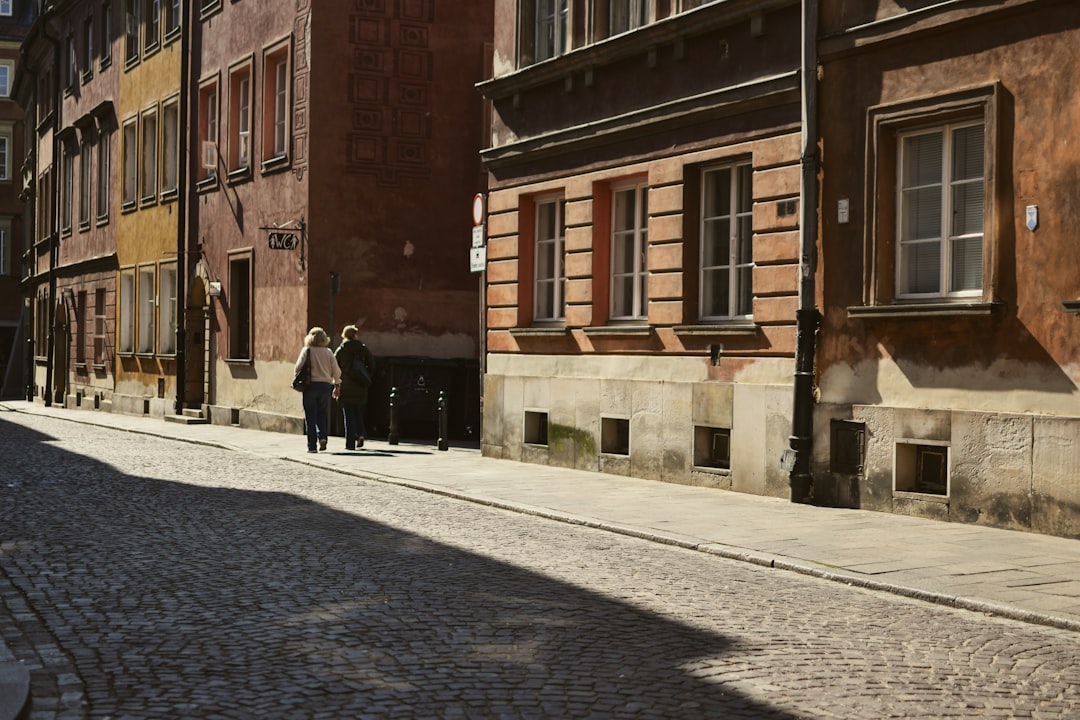
Outside the museum, the city itself tells the story. The Old Town, while reconstructed, is still clearly new compared to medieval old towns in other European cities. That newness—that evidence of destruction and rebuilding—is part of the memorial. You can see rebuilt facades of buildings, some reconstructed so accurately that it’s hard to tell the difference between original and rebuild.
There are also specific memorials. The Monument to the Warsaw Uprising, a large bronze statue titled “Insurgents,” stands in the city center. There are plaques marking where specific battles took place. The Tomb of the Unknown Soldier stands in Saxon Square and honors not just Warsaw’s uprising but all of Poland’s conflicts for independence.
The sewer system beneath Warsaw has also been partially preserved as a memorial. Some segments have been sealed and marked, commemorating the routes that insurgents used to move through the city.
The Legacy of Defiance
The Warsaw Uprising ultimately didn’t achieve its political goal. Poland didn’t become independent immediately. Instead, it fell under Soviet control, remaining so until 1989. The uprising didn’t liberate Warsaw—the Soviets did that, months later, after the fighting was over and the city was ruins.
Yet the uprising matters profoundly. It proved something about the Polish spirit—that Poles would rather fight and die free than live as slaves. It proved that even when facing overwhelming odds, even when faced with certain defeat, resistance is possible and meaningful. It connected contemporary Poles to their nation’s history of struggle for independence.
The decision to rebuild Warsaw, to reconstruct not just functional buildings but the beautiful historic Old Town, was itself a form of resistance. It said: you tried to erase us, and we’re coming back. This is our city. We’re rebuilding it. We will survive.
When you visit Warsaw today, you walk through a city that was destroyed and rebuilt. In those reconstructed streets, in those memorials, in that Warsaw Uprising Museum, you encounter one of history’s most remarkable stories of human courage and resilience in the face of evil.




Leave a Reply