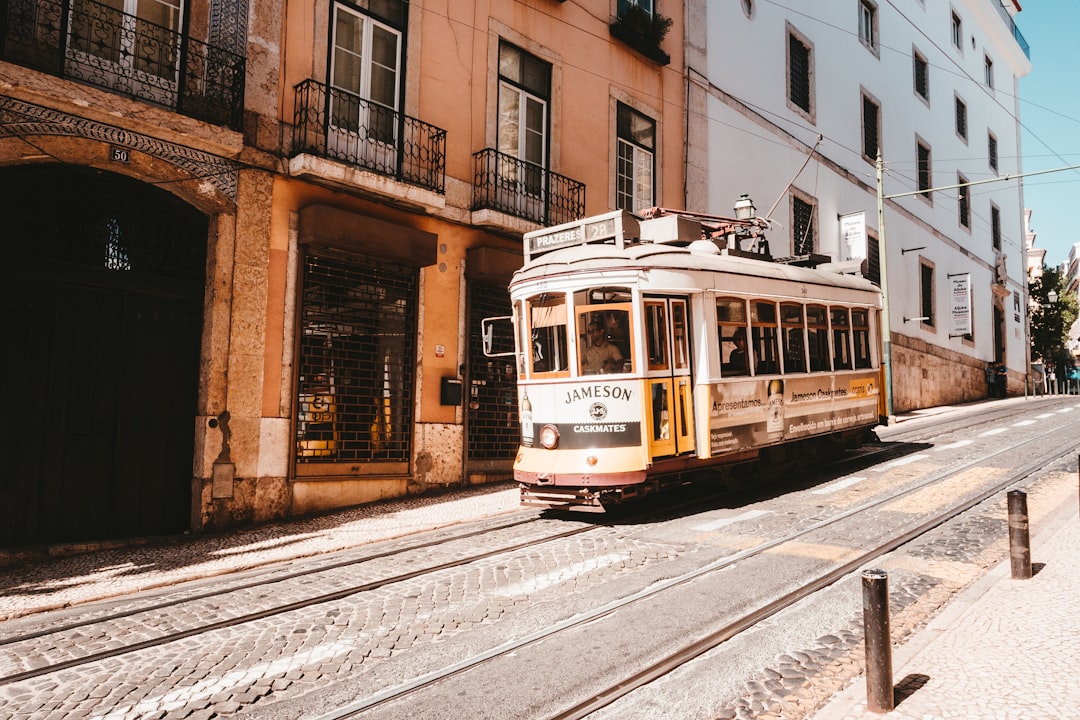
When director Paolo Sorrentino needed to bring the Vatican to life for his audacious HBO/Sky Atlantic series The Young Pope (2016) and its follow-up The New Pope (2020), he faced a challenge: how to capture the grandeur, power, and historical weight of the world’s smallest independent nation without the logistical nightmare of filming inside Vatican City itself. His answer? Lisbon. More specifically, Lisbon’s stunning royal palaces, baroque churches, and grand architectural heritage became the perfect stand-in for the Holy See. This transformation of Lisbon into a Vatican doppelgänger not only solved a production puzzle; it also marked a turning point in Portugal’s emergence as a major European filming destination and offered travelers a unique opportunity to experience the locations where some of prestige television’s most audacious scenes were filmed.
The Series: Ambition, Faith, and Visual Spectacle
The Young Pope is not your typical prestige drama. It’s a baroque, visually intoxicating meditation on faith, power, ambition, and the human cost of authority, wrapped in some of the most stunning cinematography in recent television. Jude Law stars as Lenny Belardo, a young American priest who unexpectedly becomes Pope and immediately begins implementing radical reforms that challenge centuries of Catholic tradition. The series is darkly funny, theologically sophisticated, and deeply concerned with aesthetics—how power looks, how authority moves through space, how tradition manifests in physical architecture.
Sorrentino, renowned for his visual maximalism and his sophisticated approach to Italian cinema, brought the same meticulous attention to production design to The Young Pope. The series required grand spaces that could convincingly represent Vatican institutions, papal chambers, and the ceremonial spaces where the Pope conducts official business. More importantly, Sorrentino needed architectural spaces that embodied the weight of historical tradition and institutional power—spaces that would visually communicate themes of faith, authority, and challenge.
Lisbon, with its royal palaces, Byzantine-influenced churches, and ornate baroque architecture, proved to be the ideal solution.
From Lisbon to the Vatican: The Stand-In Locations
Ajuda National Palace: The Heart of Vatican Stand-Ins
The most significant filming location in Lisbon for The Young Pope is the Ajuda National Palace (Palácio da Ajuda), one of Europe’s most impressive royal residences. Located in the Ajuda neighborhood in western Lisbon, this monumental neoclassical palace was built beginning in 1795 as a royal residence for the Portuguese royal family, though it was never fully completed. The palace remained the official residence of Portuguese royalty until 1910, and its vast rooms, ornate decorations, and imperial scale make it the perfect location to represent Vatican institutions.
Sorrentino and his production design team used the Ajuda National Palace extensively for interior scenes representing papal chambers, ceremonial spaces, and institutional spaces within the Vatican. The palace’s grand halls, with their soaring ceilings, period furniture, and historical weight, perfectly captured the visual language Sorrentino wanted: spaces that communicate centuries of accumulated power and tradition.
Visiting the Ajuda National Palace:
- Location: Largo da Ajuda, 1300-007 Lisboa
- Opening Hours: 10 AM – 6 PM (Closed Mondays; reduced hours on Sundays)
- Admission: €8.50 (discounts available for students and seniors)
- What to See: The Grand Staircase, the Throne Room, the Royal Bedroom, and the Ornate Dining Room. These spaces have the same visual grandeur that Sorrentino used in The Young Pope
- Photography: Interior photography is generally permitted; check with staff upon arrival
- Best Time to Visit: Mid-morning on weekdays for fewer crowds
When you walk through the Ajuda Palace, you’re essentially walking through the Vatican as imagined by Sorrentino. The vastness of the rooms, the ornate decorations, the sense of formality and institutional weight—this is how papal power was visualized on screen. Notice how the spaces are designed to communicate hierarchy: the high ceilings and grand proportions make individuals within them seem smaller, more subject to the weight of tradition and institutional authority.
Churches and Religious Architecture: Spiritual Spaces
Beyond the Ajuda Palace, Sorrentino and his cinematographer used Lisbon’s numerous baroque and historic churches to create religious spaces that could stand in for Vatican locations. Several churches served as filming locations:
Basilica da Estrela (Basílica da Memória Nacional): This baroque basilica, completed in 1790, features a stunning interior with ornate decorations, a magnificent dome, and all the visual apparatus of Catholic ceremony. The Basilica da Estrela provided interior religious spaces for scenes requiring ceremonial grandeur.
Sé Patriarcal (Lisbon Cathedral): One of Lisbon’s oldest religious buildings, the Sé Patriarcal is a Gothic cathedral that has been rebuilt and modified multiple times throughout its history. Its interior provides another example of Portuguese religious architecture that could represent Vatican spaces.
These churches, while not explicitly confirmed as filming locations for The Young Pope, represent the types of spaces Sorrentino drew on to create the visual vocabulary of the series. Their baroque ornamentation, scale, and ceremonial character embody the aesthetic Sorrentino was pursuing.
Architectural Symbolism: What Sorrentino Chose
Understanding why Sorrentino chose to film in Lisbon requires understanding his visual philosophy. Sorrentino is obsessed with how architecture communicates meaning. In The Young Pope, the Vatican is not simply a place where institutional business happens; it’s a visual representation of Catholic tradition, power, and the weight of history. When Lenny Belardo becomes Pope and attempts to reform the Church, he’s contending not just with theological and institutional opposition, but with the physical manifestation of tradition in stone and marble.
By choosing to film in Lisbon’s palaces and churches rather than in Rome, Sorrentino made a statement: the Vatican is not a specific place, but a system of visual and institutional codes that can be invoked through architecture anywhere. Lisbon’s baroque and neoclassical architecture, with its own imperial and religious history, carries similar weight. The palaces communicate power; the churches communicate faith and tradition. The specific geographic location matters less than the visual language.
Lisbon’s Emergence as a Filming Hub: A Turning Point
The selection of Lisbon for such a prestigious international production represented a significant moment in Portugal’s rise as a European filming destination. Before The Young Pope, Portugal was known for smaller productions and lower-budget international projects. The choice to film this audacious, visually demanding HBO/Sky Atlantic series in Lisbon signaled that international production companies and prestigious auteur directors recognized Portugal—and specifically Lisbon—as capable of hosting world-class productions.
Several factors contributed to this:
Tax Incentives: Portugal offers one of Europe’s most generous audiovisual production tax credits, providing up to 32% of qualifying production expenditure. For a major international production like The Young Pope, these incentives significantly reduce costs.
Crew and Infrastructure: Lisbon has developed a strong production infrastructure, with experienced local crews, post-production facilities, and equipment rental companies. When The Young Pope came to Lisbon, it found a production ecosystem ready to support it.
Architectural Diversity: Unlike Rome, which is famous but often “booked” for Italian productions, Lisbon offered architectural alternatives that could convincingly represent Vatican institutions while providing the novelty and cost benefits of an alternative location.
Currency Advantages: Filming in Portugal allowed international productions to leverage favorable exchange rates compared to more expensive Western European locations.
The Algarve and Surrounding Regions: Extended Portuguese Filming
While The Young Pope series primarily used Lisbon locations, the broader production utilized other Portuguese locations for exterior shots and additional filming. The Algarve region, with its dramatic clifftop formations, golden beaches, and historic fortifications, was used for landscape shots and panoramic scenes.
For travelers interested in exploring the broader Portuguese landscape used in Portuguese cinema:
Coastal Locations Near Lisbon:
The Algarve Region:
Practical Information for Visitors Following The Young Pope Locations
Getting to Lisbon:
Where to Stay:
For proximity to filming locations, stay in the Ajuda or Alcântara neighborhoods (where the palace is located), or in central Chiado/Bairro Alto with easy metro access to Ajuda. The Belém neighborhood offers proximity to other filmed locations and cultural attractions.
Getting Around:
Nearby Attractions:
Best Time to Visit:
April through June and September through October offer pleasant weather and fewer tourists than summer months. Avoid July and August when temperatures peak and crowds overwhelm major attractions. Winter months (November-February) are mild and offer fewer crowds, though some attractions may have reduced hours.
Dining Near Filming Locations:
The Ajuda neighborhood has numerous family-run restaurants serving traditional Portuguese cuisine. Try local specialties like Arroz de Marisco (seafood rice), Sardines assadas (grilled sardines), and Pastéis de Nata (custard tarts). For something more upscale, the Alcântara neighborhood has contemporary restaurants with views of the 25 de Abril Bridge.
The Broader Context: Sorrentino and Visual Authority
Understanding The Young Pope requires understanding Sorrentino’s fascination with how power manifests visually. His previous films (The Consequences of Love, This Must Be the Place, La Grande Bellezza) all explore how individuals navigate spaces of authority and tradition. By choosing to film the Vatican in Lisbon, Sorrentino extended this interest: he created a Vatican that wasn’t bound to a specific geography but rather emerged from the visual language of baroque palaces and ceremonial architecture.
This choice also reflects something about contemporary filmmaking: the understanding that locations aren’t just “real places” but visual constructs that can be assembled from components found in multiple locations. The Vatican that appears on screen in The Young Pope is not geographically Rome; it’s architecturally and visually Vatican-ish, constructed from Portuguese palaces and churches for visual impact and dramatic effect.
Conclusion: Experience the Vatican Without Leaving Portugal
For travelers interested in The Young Pope and the locations where it was filmed, Lisbon offers an unexpected opportunity: you can walk through the spaces where the Vatican was visualized on screen, understand how a contemporary auteur director uses architecture to communicate meaning, and experience the Portuguese palaces and churches that stand in for the world’s most famous religious institution.
The Ajuda National Palace remains the primary destination for anyone seeking to retrace The Young Pope‘s footsteps in Lisbon. Walking through its grand rooms, you’ll understand why Sorrentino chose it—the visual weight of historical tradition is palpable, embodied in the architecture itself. The baroque churches scattered throughout Lisbon provide additional context for the religious aesthetic the series employs.
Beyond the specific filming locations, visiting these sites offers travelers a chance to understand Portuguese history and architecture, to appreciate how European cities are increasingly valued as filmmaking destinations, and to recognize that what we see on screen is often more constructed and malleable than we initially assume. The Young Pope’s Vatican is not Rome; it’s Lisbon. And in that creative choice lies an invitation to look at the cities we visit not just as historical or tourist sites, but as visual texts where meaning is constantly being constructed and represented.




Leave a Reply