Athens gets the Parthenon and the global fame. The islands get the sunset photos and the honeymoon crowds. But Thessaloniki, Greece’s second-largest city and the capital of Macedonia, has something that neither of those can quite match: a relaxed, lived-in authenticity that makes you feel less like a tourist and more like a temporary local from the moment you arrive. This is a city where the waterfront promenade buzzes until well past midnight, where Byzantine churches hide in plain sight between apartment blocks, and where the food scene is arguably the best in all of Greece.
The White Tower and the Waterfront
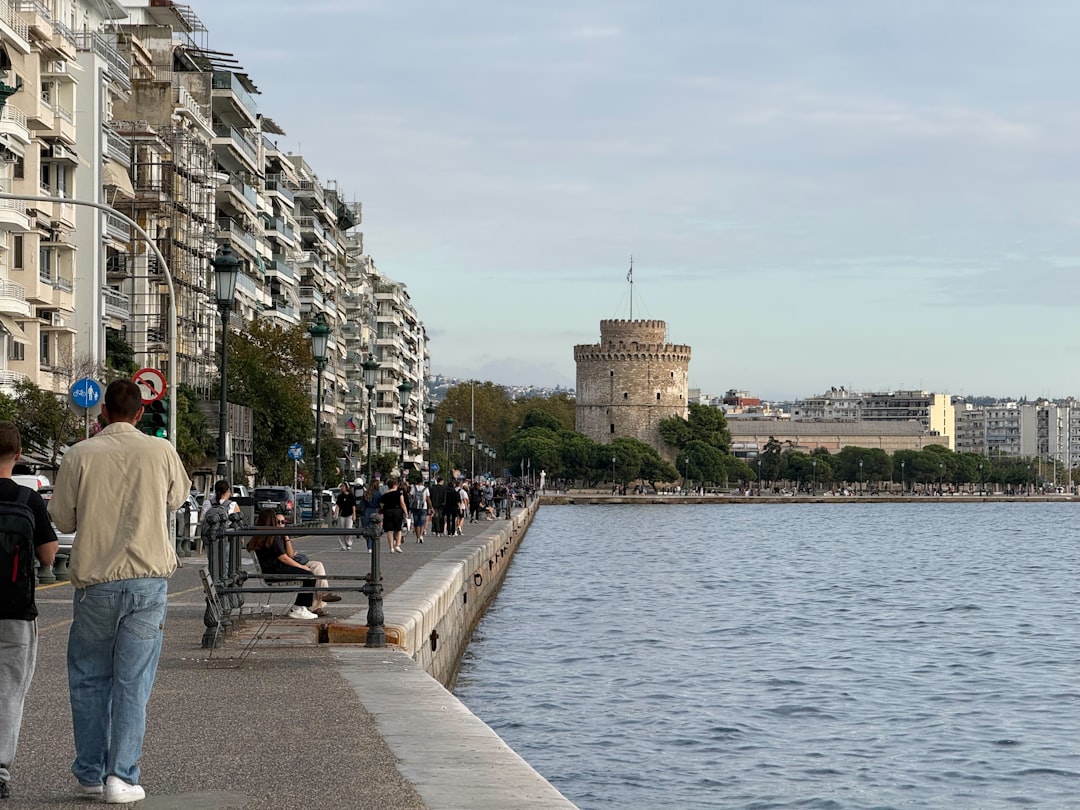
The White Tower is Thessaloniki’s most recognizable landmark, a 15th-century Ottoman fortification standing at the edge of the waterfront promenade. Once a prison and place of execution (it was whitewashed in the 19th century to symbolically erase its dark history, hence the name), it now houses a small but well-curated museum on the city’s history. Climb to the top for a panoramic view across the Thermaic Gulf, with Mount Olympus visible on clear days to the south.
The Nea Paralia waterfront promenade stretches for five kilometers along the bay and is the social spine of the city. Redesigned in 2013, it is a beautifully conceived public space with themed gardens, sculptural installations, playgrounds, and cafes. Locals walk, jog, cycle, and socialize here at all hours. On warm evenings — which in Thessaloniki means roughly April through November — the entire city seems to migrate to the waterfront. Grab a freddo espresso (iced espresso, the Greek national drink) and join the flow.
Aristotelous Square and the City Center
Aristotelous Square is the city’s grand civic space, a sweeping plaza designed by French architect Ernest Hébrard after the Great Fire of 1917 destroyed much of the old town. Its neoclassical arcaded buildings frame a view straight down to the sea, and the cafes that line both sides are prime people-watching territory. From here, the commercial streets of Tsimiski and Egnatia radiate outward, the latter following the line of the ancient Roman Via Egnatia that once connected Constantinople to the Adriatic.
Ano Poli: The Upper Town
Above the modern city center, the old Upper Town of Ano Poli survived the 1917 fire and retains its Ottoman-era character: narrow lanes, overhanging wooden balconies, tiny squares shaded by plane trees, and fragments of the Byzantine city walls. The Heptapyrgion fortress at the top offers sweeping views, and the walk up through the neighborhood is full of small discoveries — a Turkish hammam converted into a gallery, a Byzantine chapel with faded frescoes, a taverna with three tables and no menu where the owner brings you whatever he cooked that morning.
Byzantine Churches and UNESCO Heritage
Thessaloniki is home to some of the finest Byzantine architecture outside Istanbul, and 15 of its churches and monuments are collectively designated a UNESCO World Heritage Site. The Rotunda, originally built as a Roman temple by Emperor Galerius in the 4th century, later served as a church and a mosque and still retains stunning early Christian mosaics on its dome. The Church of Agios Dimitrios, dedicated to the city’s patron saint, is the largest church in Greece and contains remarkable 7th-century mosaics. These sites are scattered throughout the city and are free or nearly free to visit, making them easy to weave into a walking tour.
Food: Thessaloniki’s Greatest Claim to Fame
Ask any Greek where to eat in their country, and a surprising number will say Thessaloniki. The city’s cuisine reflects its multicultural past — Greek, Ottoman, Sephardic Jewish, and Anatolian influences all leave their mark. Start your morning with bougatsa, a flaky phyllo pastry filled with custard cream, cheese, or spiced minced meat. The best places are near the Modiano Market: Bougatsa Bantis and Bougatsa Giannis have been rivals for decades, and both are excellent.
The Modiano Market itself, recently renovated, is a covered market where fishmongers, spice sellers, olive vendors, and butchers operate alongside trendy new food stalls and wine bars. Nearby, Kapani Market is older and more chaotic, and its surrounding streets hide some of the city’s best ouzeri (tavernas specializing in small plates meant to accompany ouzo or tsipouro). Order a spread of meze — grilled octopus, fried peppers, saganaki cheese, marinated anchovies — and settle in for the long, convivial Greek meal.
Nightlife and Day Trips
Thessaloniki’s nightlife is legendary within Greece. The Ladadika district, a former oil-merchants’ quarter near the port, is packed with bars and live-music venues. Valaoritou Street has become the city’s alternative nightlife hub, with industrial-chic bars and clubs in converted warehouses. And for a complete change of pace, the three-fingered Halkidiki peninsula is less than an hour’s drive away, offering pine-backed beaches and turquoise water that rival anything in the islands — without the ferry ride.




Leave a Reply