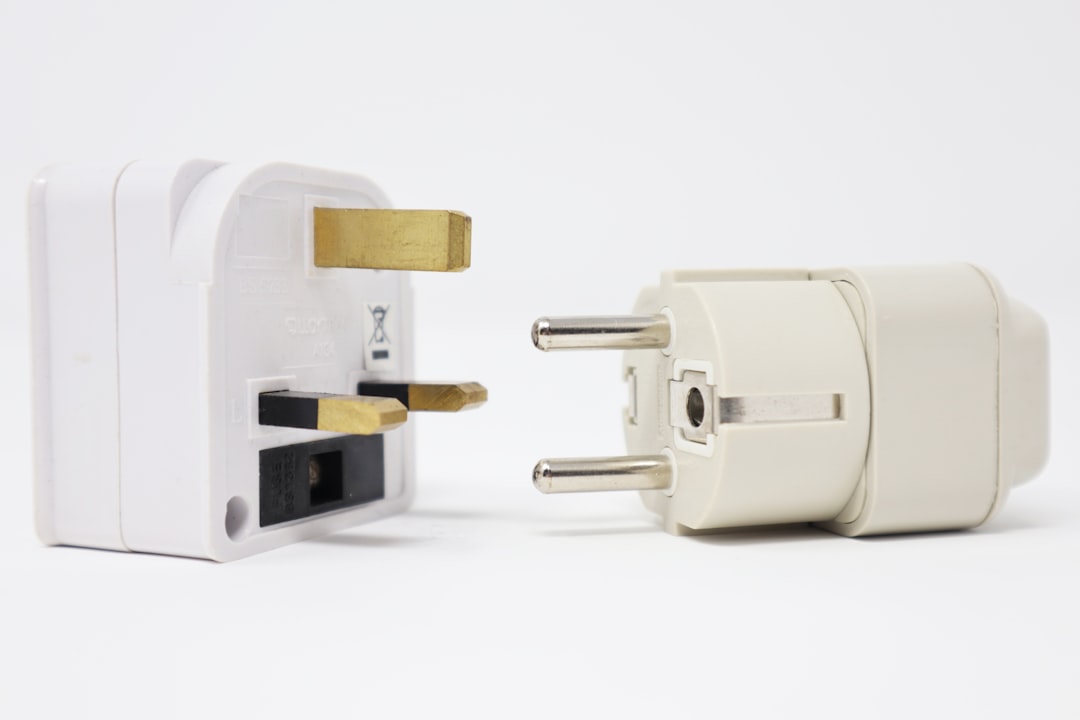
Few things are more frustrating than arriving at your European hotel with a dead phone and no way to charge it. The good news is that European power outlets are far more standardized than most travelers realize, and a single inexpensive adapter handles the vast majority of countries. Here is what you actually need to know, without the confusing charts listing 15 plug types you will never encounter.
Type C: The Europlug That Covers Most of Europe
The Type C plug, commonly called the Europlug, has two round pins and fits into outlets across almost all of continental Europe. This single plug type works in France, Germany, Spain, Italy, Portugal, Netherlands, Belgium, Austria, Greece, Scandinavia, Eastern Europe, and many more countries. While some of these countries have their own specific outlet designs (France uses Type E with a grounding pin, Germany uses Type F with grounding clips), the basic two-pin Type C plug fits into all of them.
For most travelers, a simple US-to-Type-C adapter costing about $5-8 is all you need for a continental European trip. Buy two in case you lose one.
Type G: The United Kingdom and Ireland
The UK and Ireland use the Type G plug with three large rectangular pins. This is completely incompatible with continental European outlets and vice versa. If your trip includes Britain or Ireland, you need a separate adapter. Type G adapters are inexpensive and widely available at UK airports and convenience stores if you forget to bring one. Many UK hotels also have shaver outlets in the bathroom that accept Type C European plugs, but these are low-wattage and generally only suitable for electric razors and toothbrushes.
Type J: Switzerland and Liechtenstein
Switzerland uses the Type J plug with three round pins in a triangular arrangement. Standard two-pin Type C Europlugs fit into Swiss outlets without an adapter, so you are covered for phone chargers and laptops. However, three-pin grounded plugs from other European countries will not fit Swiss outlets. In practice, this only matters if you are bringing a European appliance with a grounded plug into Switzerland.
Universal Adapters: Worth It?
Universal travel adapters that claim to work in 150+ countries cost €15-30 and include sliding prongs for every major outlet type. They are convenient if you travel frequently to different regions of the world. For a Europe-only trip, they are bulkier and more expensive than necessary. A small Type C adapter and a Type G adapter (if visiting the UK) together cost under $10, weigh almost nothing, and do the same job.
If you do buy a universal adapter, avoid the cheapest options with flimsy construction. A poorly made adapter that falls out of the wall or has loose connections is worse than none at all. Brands like Ceptics and EPICKA offer solid mid-range options.
Voltage: The Actually Important Part
European electrical systems run at 220-240 volts versus the 110-120 volts used in North America. This is a bigger deal than plug shapes. Plugging a 110V-only device into a 220V outlet will fry it, potentially dangerously.
The good news: almost all modern electronics are dual-voltage. Check the fine print on your charger or power adapter. If it says “Input: 100-240V,” you are fine. Just use a plug adapter. This covers virtually all phone chargers, laptop power supplies, tablet chargers, camera battery chargers, and electric toothbrush chargers.
Devices that are not dual-voltage and need a voltage converter include most hair dryers, curling irons, straighteners, and some older electric razors. Voltage converters are heavy, expensive, and unreliable. A much better solution is to buy a cheap dual-voltage hair dryer (they exist for about $20-30) or simply use the one provided by your hotel. Most European hotels provide hair dryers.
Practical Charging Setup
The most efficient charging setup for European travel is one plug adapter plus a compact USB charging hub with three or four ports. This lets you charge your phone, tablet, camera battery, and portable battery pack simultaneously through a single outlet. Many European hotel rooms have only one or two accessible outlets, so a multi-port charger is genuinely useful. A small portable power strip with USB ports is even better for couples or families.
One final tip: bring a portable battery pack of at least 10,000 mAh. Between GPS navigation, camera use, and translation apps, your phone battery will drain faster than at home. A good power bank gets you through a full day of heavy use without hunting for outlets in cafes.



Leave a Reply