The Viking Age, spanning roughly from 793 AD when Norse raiders attacked Lindisfarne monastery to 1066 when Harald Hardrada fell at the Battle of Stamford Bridge, reshaped the political and cultural map of Europe. But to truly understand the Norse, you need to visit the places where they built ships, worshipped gods, buried kings, and carved runes into stone. Across Scandinavia, an extraordinary network of museums, archaeological sites, and living landscapes brings the Viking world to life with a vividness that no textbook can match.
Roskilde Viking Ship Museum, Denmark
On the shores of Roskilde Fjord, about 30 minutes west of Copenhagen by train, sits what may be the world’s finest Viking museum. In 1962, archaeologists recovered five ships that had been deliberately sunk around 1070 AD to block the fjord’s narrow channel against enemy fleets. The ships — ranging from a massive warship to a small fishing vessel — are displayed in a purpose-built hall where enormous windows frame the fjord beyond, connecting the artifacts to the water they once sailed. The museum’s outdoor boatyard is equally compelling: skilled craftspeople build replica Viking ships using period tools, and in summer, visitors can sail on completed replicas, gripping oars and feeling the clinker-built hull flex over the waves.
Birka, Sweden: A Trading Hub Frozen in Time
On the island of Björkö in Lake Mälaren, accessible by a scenic boat ride from Stockholm, lie the remains of Birka — one of the earliest urban settlements in Scandinavia. Founded around 750 AD, Birka was a crucial trading center where goods from as far as Baghdad, Byzantium, and the British Isles changed hands. The site was abandoned around 975 AD, and because no later settlement was built over it, the archaeological remains are exceptionally well-preserved. The on-site museum displays finds including Arabic silver coins, glass beads from the eastern Mediterranean, and the grave of the famous “Birka warrior woman” — a high-status burial containing weapons and horses that DNA analysis in 2017 confirmed belonged to a biological female, upending long-held assumptions about Viking gender roles.
Lofotr Viking Museum, Norway
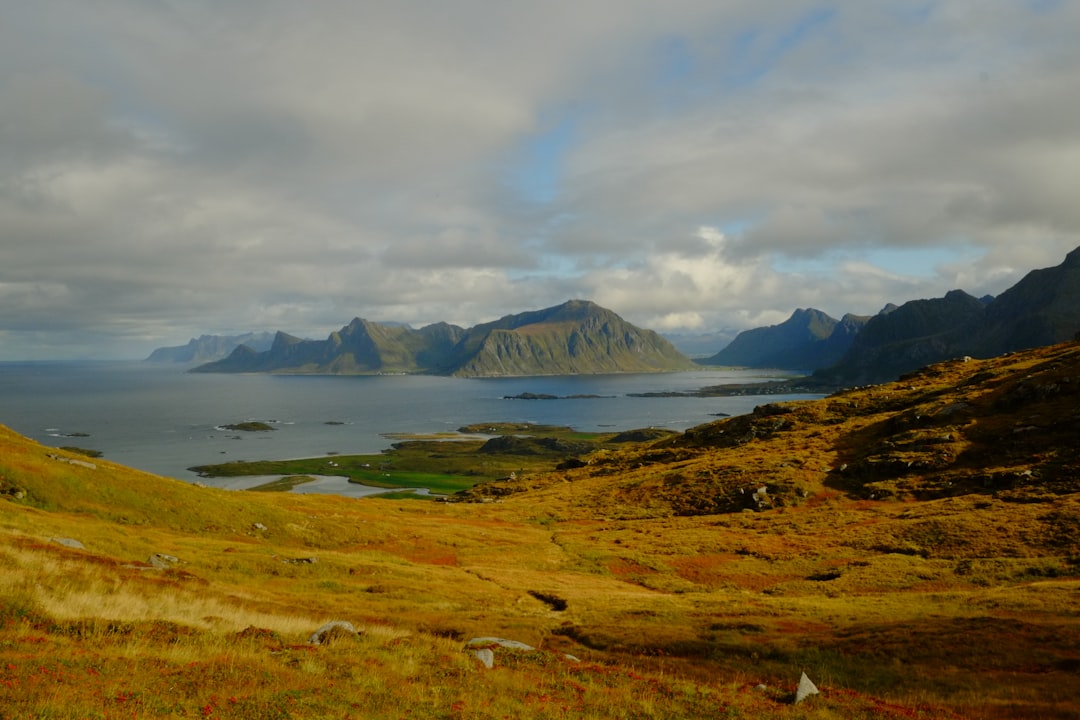
In the Lofoten Islands of northern Norway, where jagged peaks plunge into Arctic waters, archaeologists in 1983 discovered the foundations of the largest known Viking-era longhouse — 83 meters in length. The Lofotr Viking Museum, built around a full-scale reconstruction of this chieftain’s hall, offers an immersive experience unlike any other Viking site. Inside the longhouse, costumed interpreters prepare meals over an open hearth, explain Norse textile production, and demonstrate weapon handling. Outside, you can try your hand at archery, row a replica boat, or watch a blacksmith forge iron using Viking-era techniques. The setting itself — surrounded by the dramatic Lofoten landscape that made these communities both isolated and resilient — adds an atmospheric dimension no inland museum can replicate.
Runestones and Sacred Sites
Scattered across Sweden, Denmark, and Norway are approximately 3,000 surviving runestones — carved memorial stones erected between the fourth and twelfth centuries. The greatest concentration is in Sweden’s Uppland province, where over 1,000 stones stand in fields, churchyards, and along ancient roads. The Jelling Stones in Denmark, erected by King Gorm the Old and his son Harald Bluetooth in the tenth century, are sometimes called “Denmark’s birth certificate” — the larger stone bears the oldest known depiction of Christ in Scandinavia and a runic inscription claiming Harald “won for himself all of Denmark and Norway and made the Danes Christian.”
At Gamla Uppsala (Old Uppsala), just north of modern Uppsala in Sweden, three large burial mounds dating to the sixth century mark what was once the most important pagan religious center in Scandinavia. The medieval chronicler Adam of Bremen described a great temple here, adorned with gold, where sacrifices were offered to Odin, Thor, and Freyr. Though the temple has never been definitively located, excavations continue, and the site retains a powerful sense of ancient sanctity.
Beyond Scandinavia: Jorvik and L’Anse aux Meadows
The Viking story extends far beyond Scandinavia. In York, England — the Norse called it Jórvík — the Jorvik Viking Centre is built directly over excavated tenth-century Viking-age street levels. Visitors ride through a reconstruction of Viking-era York, complete with synthesized smells, before viewing thousands of original artifacts discovered during the Coppergate excavation. And at L’Anse aux Meadows in Newfoundland, Canada, a UNESCO World Heritage Site preserves the remains of the only confirmed Norse settlement in North America, predating Columbus by nearly 500 years. The connection between Scandinavian launch points and these distant outposts illustrates the astonishing reach of Viking navigation and ambition.
Modern DNA studies estimate that six percent of the British population carries significant Norse genetic markers, rising to over 25 percent in Orkney and Shetland. The Vikings did not merely raid and retreat — they settled, intermarried, and left a legacy woven into the genetic and cultural fabric of Europe that persists to this day.




Leave a Reply