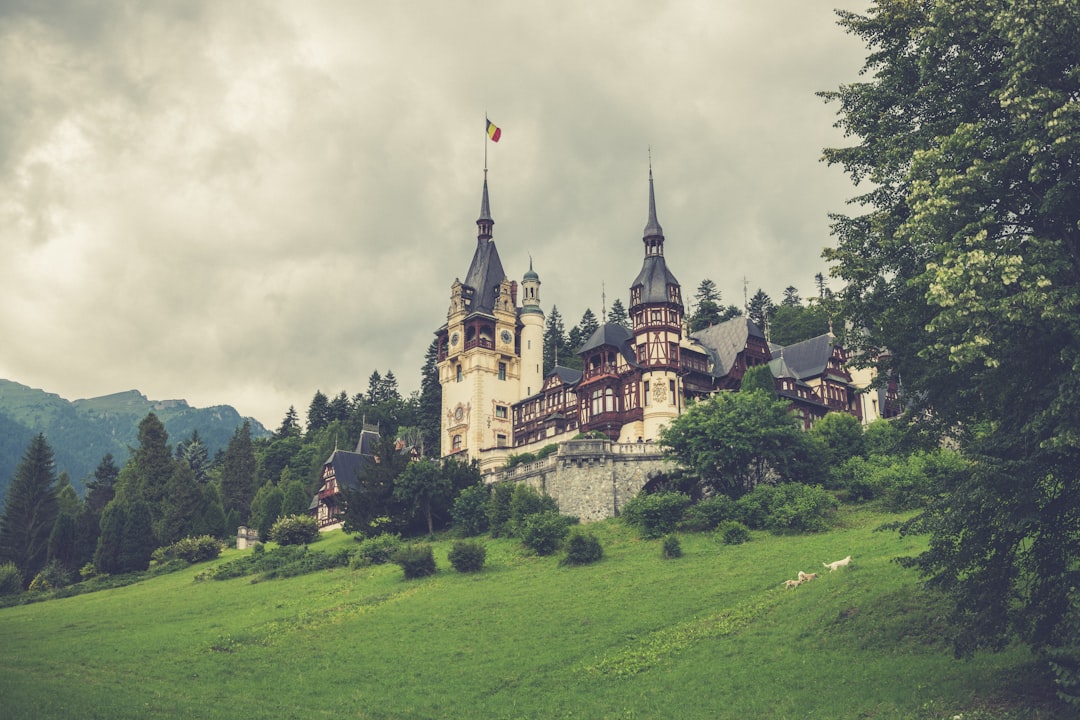
Say “Transylvania” and most people picture fog-shrouded castles, bat-winged counts, and a general atmosphere of Gothic menace. Bram Stoker has a lot to answer for. The real Transylvania, in the heart of Romania, is one of Europe’s most beautiful and least-visited regions — a place of flower-filled meadows, fortified medieval churches, pastoral villages where horse-drawn carts are still everyday transport, and some of the continent’s last truly wild forests. The Dracula connection is thin (and we will address it head-on), but the reasons to visit are deep and genuine.
Brașov: Your Transylvanian Base
Most Transylvanian itineraries begin in Brașov, a handsome city of about 250,000 set in a valley surrounded by the Carpathian Mountains. The old town is among the best-preserved in Romania: cobblestoned streets, baroque facades in sherbet colors, a massive Gothic church, and a central square — Piața Sfatului — that buzzes with cafe life. The Black Church (Biserica Neagră), named for the soot stains left by a devastating fire in 1689, is the largest Gothic church between Vienna and Istanbul, and its interior contains an extraordinary collection of over 100 Anatolian rugs, donated by Saxon merchants over the centuries.
Climb (or take the cable car up) Tampa Mountain for panoramic views of the red-roofed old town backed by dark green forests. Walk the Rope Street (Strada Sforii), one of the narrowest streets in Europe, barely wide enough for two people to pass. And eat well — Brașov’s restaurant scene has blossomed in recent years, with traditional Romanian food getting a thoughtful modern treatment at places like Sergiana and Bistro de l’Arte.
Bran Castle: A Reality Check
Let us get this out of the way. Bran Castle, marketed as “Dracula’s Castle” and visited by nearly a million people a year, has almost nothing to do with Vlad the Impaler (the historical figure who inspired Stoker’s character) or with Bram Stoker’s novel. Vlad may have passed through Bran at some point, but he never lived there. Stoker never visited Romania and based his castle descriptions on research about other locations. What Bran Castle actually is: a well-preserved 14th-century fortress on the border between Transylvania and Wallachia, with attractive interiors furnished as the country residence of Queen Marie of Romania in the 1920s.
Visit it if you are in the area (it is 30 kilometers from Brașov), but set your expectations for a pleasant medieval castle with nice mountain views rather than a Gothic horror experience. The surrounding commercial village of souvenir shops selling Dracula fangs and vampire wine is, admittedly, somewhat dispiriting.
Sighișoara: Where Vlad Was Actually Born
If you want a genuine Vlad connection, head to Sighișoara, about 200 kilometers north of Brașov. This walled medieval citadel is the real deal: a UNESCO World Heritage Site with cobblestone lanes, pastel-painted towers, and a genuine house where Vlad III (later known as “the Impaler”) was born around 1431. The yellow house on the main square bears a plaque and now operates as a restaurant. The citadel itself is one of the best-preserved inhabited medieval fortifications in Europe, and walking its streets at dusk, with the covered wooden staircase (the Scholars’ Stairs) climbing to the Church on the Hill, is atmospheric in the best possible way.
Painted Monasteries of Bucovina
Northeast of Transylvania proper, in the Bucovina region of Moldavia, a collection of 15th- and 16th-century monasteries are covered — inside and out — with elaborate frescoes depicting biblical scenes, saints’ lives, and apocalyptic visions. The exterior paintings were designed to teach scripture to illiterate worshippers, and despite five centuries of exposure to the elements, many retain their vivid colors: the famous “Voroneț blue” of Voroneț Monastery is compared to the blue of Chartres Cathedral. Sucevița, Moldovița, and Humor are other highlights. These monasteries are a significant detour from the main Transylvanian circuit (plan a full day), but they are among the most remarkable artistic achievements in Eastern Europe.
Saxon Fortified Churches
In the 12th century, Saxon (German) colonists were invited to settle in Transylvania to defend the frontier, and the villages they established still dot the rolling hills between Brașov and Sighișoara. Many of these villages are centered on fortified churches — places of worship surrounded by defensive walls, towers, and granaries where the community could shelter during Ottoman raids. Viscri (famously championed by King Charles III, who owns a restored house in the village), Biertan, and Prejmer are the most impressive, and several are UNESCO-listed. The Saxon legacy gives Transylvania an unexpectedly Central European flavor, with village squares that would not look out of place in Saxony or Franconia.
Carpathian Hiking and Bear Watching
The Carpathian Mountains arc around Transylvania like a natural fortress, and they shelter some of Europe’s richest biodiversity. Romania is home to the largest population of brown bears in Europe outside Russia — an estimated 6,000 to 7,000 individuals — as well as wolves and lynx. Responsible bear-watching tours operate from hides near Brașov, typically in the evening when bears emerge to forage. The Piatra Craiului National Park and the Făgăraș Mountains offer outstanding hiking, with trails ranging from easy valley walks to demanding ridge traverses.
- Romanian hospitality is warm and genuine. Guesthouses (pensiuni) in villages like Viscri, Mălâncrav, and Șirnea offer home-cooked meals, often with ingredients from the family garden, at prices that feel almost embarrassingly low: expect 30 to 50 euros for a double room with breakfast and dinner.
- Public transport between major towns is adequate (trains connect Brașov, Sighișoara, and Sibiu), but a rental car opens up the villages and monasteries immeasurably. The Transfăgărășan highway, crossing the Făgăraș range, is one of Europe’s most dramatic mountain roads — open June through October, weather permitting.




Leave a Reply