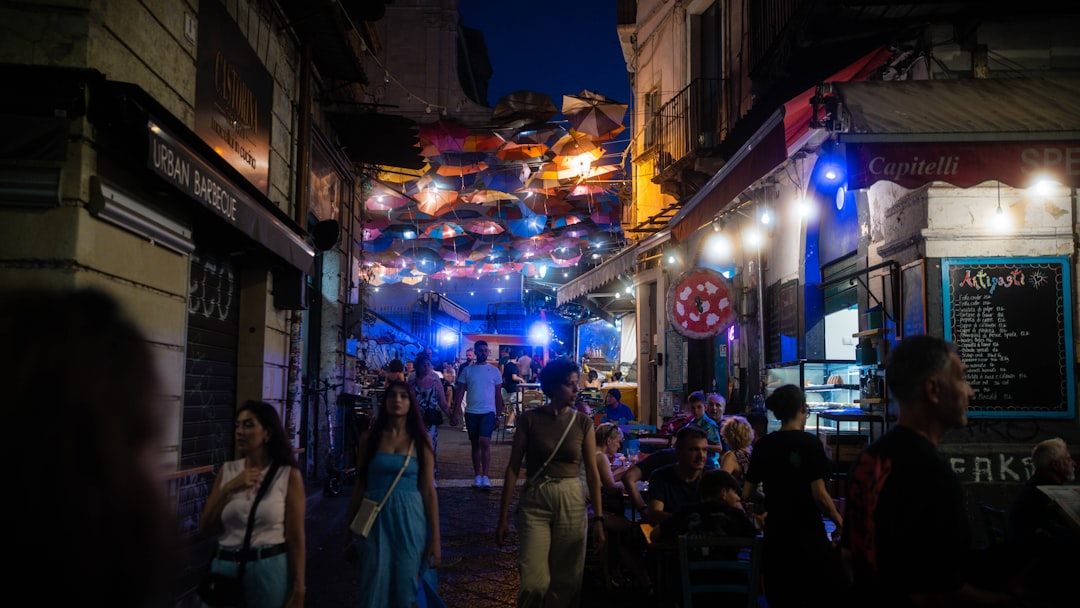
It is 9:30 on a Tuesday night in Madrid, and the restaurants are just starting to fill. Families with young children take their seats. Couples order bottles of wine. Waiters move without urgency. For the Spanish, the evening is just beginning. For the American tourist who has been hungry since 6:00 PM and ate a desperate sandwich from a convenience store at 7:30, it can feel like an alternate reality.
The Late Dinner Map
Dinner times across Europe follow a rough gradient from north to south. In Scandinavia and the Netherlands, people sit down to eat between 5:30 and 7:00 PM — not far from American norms. In Germany, Austria, and Switzerland, the traditional Abendbrot (literally “evening bread”) happens around 6:00 to 7:30 PM, though it is often a cold meal of bread, cheese, and deli meats rather than a cooked dinner. Move south to France and northern Italy, and dinner shifts to 7:30 or 8:00 PM. By the time you reach southern Italy, Greece, and especially Spain, dinner rarely begins before 9:00 PM, and 10:00 PM is perfectly normal.
Spain holds the European record for late dining, with many restaurants not even opening for dinner service until 8:30 or 9:00 PM. If you show up at a Spanish restaurant at 7:00 PM, you will likely find the doors locked or the kitchen still closed. The few diners present at 8:00 PM are almost invariably tourists.
Why So Late?
Several factors converge to explain late Mediterranean dining. The most practical is heat. In countries where summer temperatures regularly exceed 35 degrees Celsius, the midday hours are simply too hot for heavy meals or much activity at all. The traditional response, developed over centuries of agricultural life, was to eat a substantial lunch, rest during the hottest hours (the siesta in Spain, the riposo in Italy, the mesimeri in Greece), and then resume activity in the cooler evening. Dinner naturally shifted later as a result.
In Spain specifically, there is also a quirk of geography and politics. Spain is on the wrong time zone. Geographically, it should share a time zone with Britain and Portugal (UTC+0), but Francisco Franco changed the clocks in 1940 to align with Nazi Germany (UTC+1), and they never changed back. This means the sun rises and sets about an hour later than the clock suggests, pushing the entire daily rhythm — meals, work, sleep — an hour later than it would otherwise be.
Lunch Is the Real Meal
Understanding late dinner requires understanding lunch. In much of southern Europe, lunch (typically between 1:00 and 3:00 PM) is the main meal of the day. The Spanish comida, the Italian pranzo, and the French déjeuner are substantial affairs — often multiple courses, eaten sitting down, sometimes lasting well over an hour. Workers may have a full two-hour lunch break. When you have eaten a three-course meal at 2:00 PM, you are simply not hungry again at 6:00.
This is a fundamentally different relationship with food than the American pattern of a quick lunch at the desk followed by dinner as the day’s main event. In the Mediterranean model, the evening meal is often lighter — a salad, some tapas, grilled fish — and serves as much as a social occasion as a nutritional one. The point of a late Spanish dinner is not really the food. It is the company, the conversation, the night air, and the pleasure of being out in the world when the day has finally cooled.
How to Adjust Your Schedule
Travelers who try to impose their home eating schedule on southern Europe will spend a lot of time eating alone in empty restaurants or subsisting on packaged snacks. Instead, adapt. Here is how:
- Eat a real lunch. Take advantage of the menú del día in Spain (a multi-course fixed-price lunch, often under 15 euros) or the pranzo deals at Italian trattorias. Make lunch your big meal.
- Embrace the late afternoon snack. The Spanish merienda (around 5:00-6:00 PM) bridges the gap between lunch and dinner. A coffee and a pastry, or some tapas with a small beer, will keep you going.
- Shift your dinner gradually. If you normally eat at 6:00, try 7:30 on your first night, 8:30 on your second, and by your third evening you may find yourself comfortably ordering at 9:00.
- Stay up later. The entire daily rhythm is shifted. If you eat dinner at 10:00, you will not go to bed at 10:30. Midnight becomes a normal bedtime. The city at 11:00 PM is vibrant, alive, and full of families.
Once you surrender to the rhythm, something wonderful happens. The anxious hunger fades. The long, warm evenings begin to make sense. You find yourself genuinely not wanting dinner before 9:00, and you realize that the Mediterranean schedule is not inconvenient — it is civilized.




Leave a Reply