Slovenia is the rare European country that punches so far above its weight it seems almost unfair to its neighbours. Wedged between Italy, Austria, Hungary, and Croatia, this compact nation of just two million people packs Alpine peaks, Mediterranean coastline, vast cave systems, and one of Europe’s most charming capitals into an area roughly the size of New Jersey. You can swim in the Adriatic in the morning, hike an Alpine pass after lunch, and be sipping natural wine in a vineyard by dinner. And you can do all of it for a fraction of what you would spend in neighbouring Italy or Austria.
Lake Bled: Yes, It Really Looks Like That
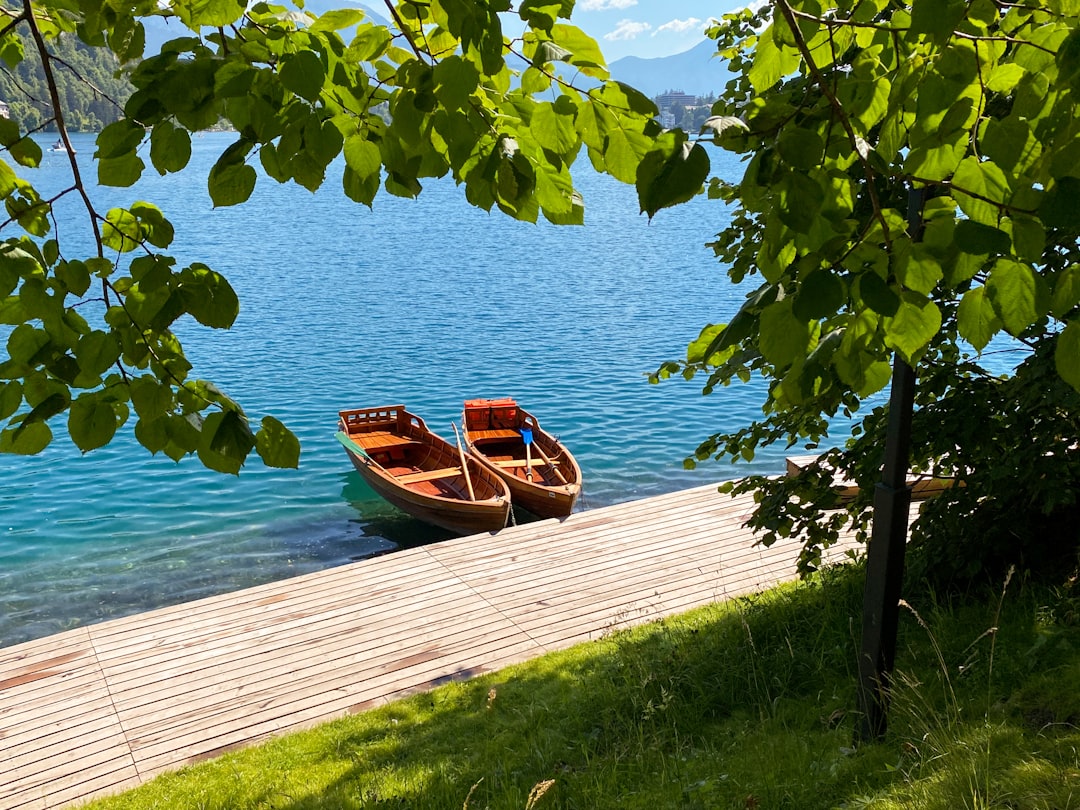
Let us address the postcard first. Lake Bled, with its island church, clifftop castle, and backdrop of the Julian Alps, looks like a painting commissioned by a medieval king who wanted something nice for the throne room. The thing is, it really does look like that. The emerald-green lake is small enough to walk around in about ninety minutes, and you can rent a traditional pletna boat or swim out to the island in summer. The castle, perched on a sheer cliff one hundred and thirty metres above the water, dates to 1011 and houses a small museum, a printing press workshop, and a wine cellar where you can bottle your own.
The trick with Bled is timing. Visit in July and August and you will share the lake path with half of Instagram. Come in May or September and you will have misty mornings, golden light, and far fewer crowds. Stay at least one night so you can experience the lake at dawn, when the mist lifts off the water and the only sound is church bells echoing across the surface.
Ljubljana: Europe’s Most Liveable Capital
Slovenia’s capital is a revelation. Ljubljana (say lyoob-LYAH-nah, roughly) is a city of about 290,000 people built along a willow-lined river, presided over by a hilltop castle, and virtually car-free in its historic centre. The architect Jože Plečnik redesigned much of the city in the early twentieth century, giving it elegant bridges, covered markets, and a riverside promenade that feels like a smaller, quieter, and far more affordable version of Vienna.
The Dragon Bridge, guarded by four copper dragons that have become the city’s unofficial mascots, connects the old town to the market district. Cross it and explore the Central Market, where vendors sell local honey, pumpkin seed oil, and štruklji (rolled pastry with various fillings). Take the funicular up to Ljubljana Castle for panoramic views, or simply wander the riverbank cafés and let the city’s gentle pace wash over you. Ljubljana was named European Green Capital in 2016, and the commitment to sustainability is visible everywhere—pedestrian zones, abundant cycling infrastructure, and a general absence of the chaotic traffic that plagues other European capitals.
Underground and Along the Coast
An hour south of Ljubljana, the Škocjan Caves are a UNESCO World Heritage site that will recalibrate your understanding of what caves can be. This is not a gentle stroll past some stalactites. The underground canyon is over one hundred metres deep and two and a half kilometres long, with a roaring underground river, an enormous cavern called the Silent Cave, and a walkway that clings to the rock face above a dizzying drop. It is one of Europe’s great natural wonders, and it receives a fraction of the visitors that nearby Postojna Cave attracts—partly because Škocjan cannot be visited by train, and partly because it remains blissfully under-marketed.
Slovenia’s sliver of Adriatic coastline is just forty-six kilometres long, but it makes every metre count. The town of Piran juts into the sea on a narrow peninsula, its Venetian architecture a reminder that the Republic of Venice controlled this coast for five hundred years. The central Tartini Square opens directly onto the harbour, and the narrow streets behind it climb to the Church of St. George, from whose bell tower you can see all the way to Italy on a clear day. Piran has excellent seafood, a fraction of the crowds of Croatian coastal towns just across the border, and a pace of life that encourages long lunches and evening passeggiatas along the waterfront.
The Julian Alps and the Soča Valley
North of Bled, the Julian Alps offer some of the finest hiking in Europe. Triglav National Park, named for Slovenia’s highest peak (2,864 metres), is threaded with well-marked trails that range from gentle valley walks to serious mountaineering. The Soča Valley, running south from the Vršič Pass, is centred on a river so impossibly turquoise that it looks digitally enhanced. It is not. The Soča is one of Europe’s most beautiful rivers, and you can kayak it, fly-fish it, or simply stare at it in disbelief from one of the wooden bridges that span its gorges.
Why Slovenia Makes Financial Sense
Slovenia uses the euro, but prices remain noticeably lower than in Italy, Austria, or France. A good restaurant meal with wine might cost twenty to thirty euros per person. A double room in a quality guesthouse in the countryside runs sixty to ninety euros. Public buses are cheap and reliable, though renting a car (from about thirty euros per day) gives you the most flexibility in a country where the best sights are often down a side road. From Ljubljana, you can reach almost any corner of the country in under three hours. For travellers who want Alpine scenery, Mediterranean warmth, world-class caves, and excellent food without the price tag or the crowds, Slovenia is quietly, patiently waiting.



Leave a Reply